
 Back
Back
OV
31 July
OV’s Radioactive Rhinos
Readers will recall learning about the launch of OV Professor James Larkin’s (S 74-81) multi-faceted rhino anti-poaching programme, The Rhisotope Project, in the OV News in May 2021 (which you can read here).
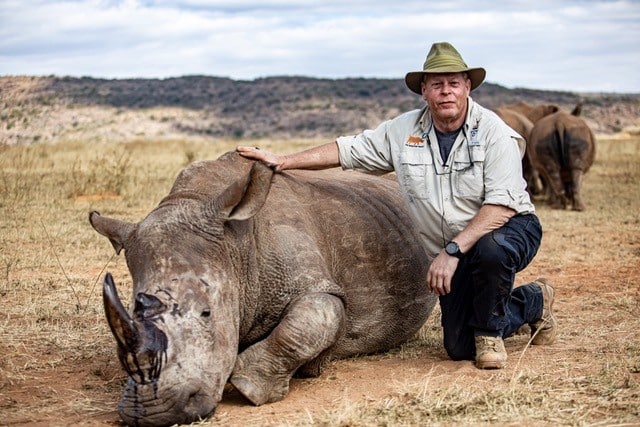
Based in South Africa, James is the Director of the Radiation and Health Physics Unit (Research & Innovation) for the University of the Witwatersrand. Together with his international team of scientists and conservationists, The Rhisotope Project aims to incorporate small quantities of radioactive material into the horns of the at risk African Rhinos. The intention being that introducing the radioactive materials will devalue the horn by reducing its desirability as well as making any horns that are taken, that much more easily detectable as this contraband is moved across international borders.
When we last heard from James, the project was still in its infancy and in the early stages of research. However, we are delighted to hear further from James, with the update that now over 20 animals at the Rhino Orphanage in the Waterberg region have had the radioisotopes injected into their horns, making them unattractive to poachers.
James explains that inserting the radioactive pellets is both considerably more cost-effective than dehorning the animals, and less stressful for the animals: the rhino is put to sleep for the injections, so it does not feel any pain. The process also drastically reduces the time that the animals are under anaesthetic versus dehorning, from around 40 to 10 minutes.
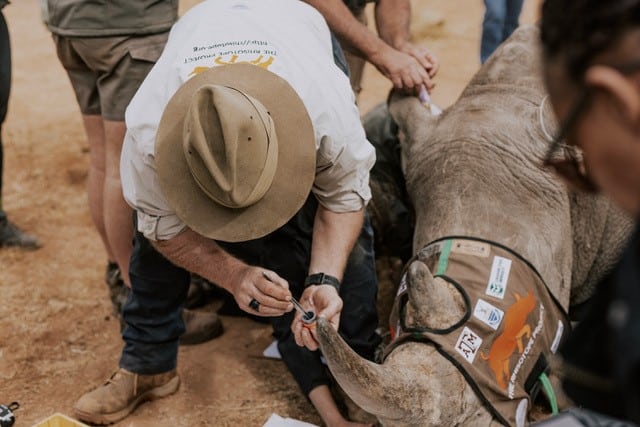
“I’m not saying this is the panacea,” added James, “But if we can offer an alternative tool to put in the toolbox, I think we’re making a significant contribution to the protection of rhinos.”
We look forward to hearing more from James as the project progresses.