Back
OV
24 September
OV Classics Conference 2026
Many thanks to Hon OV Emma Kate Booth for this precis of the latest Classics Conference, held earlier this month:
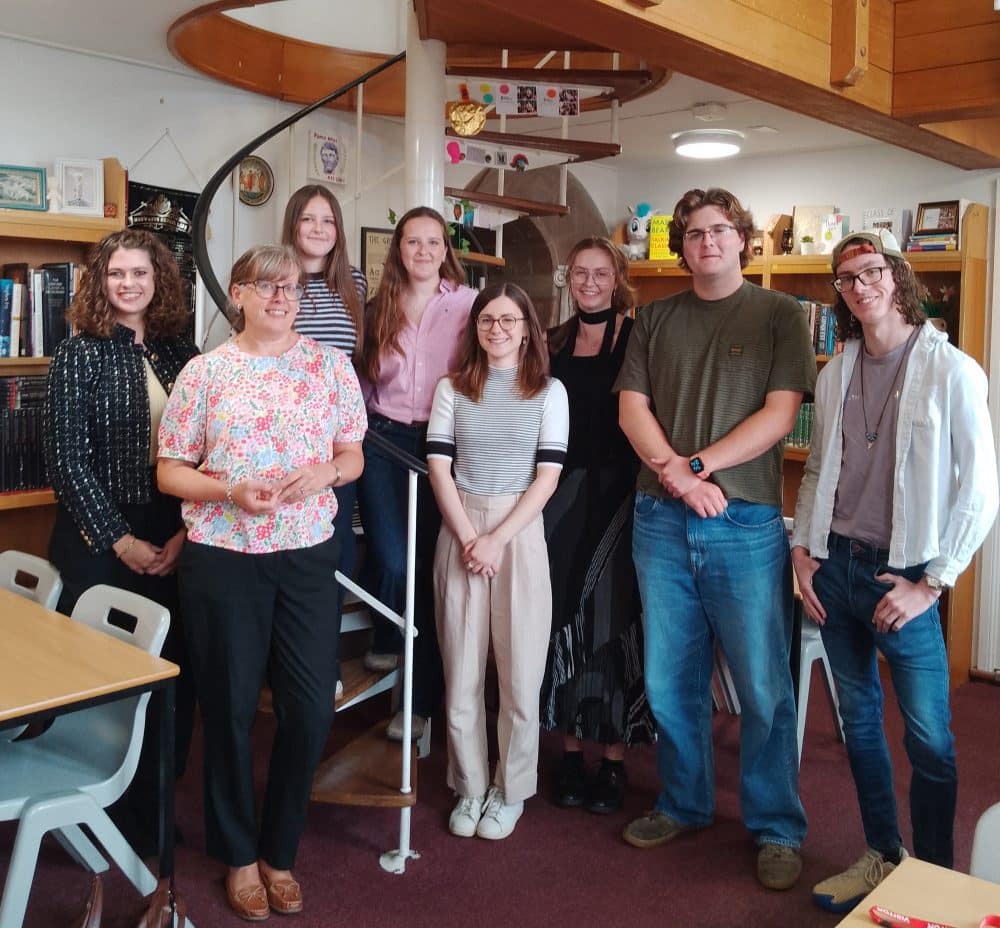
Following the success of last year’s event, six OVs returned to King’s for the second Classics Conference on Friday 11th September 2026. This year’s event took place in the Science Lecture Theatre for Fifth and Sixth Form Latin and Classics students.
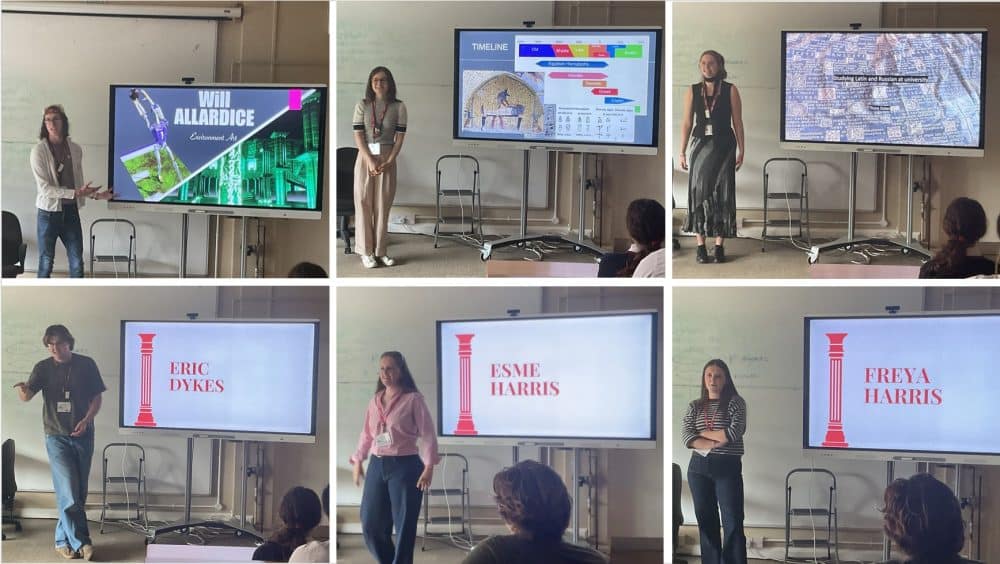
Will Allardice (Br 20-25) is studying Game Design at Falmouth University and shared some of his award-winning portfolio. He highlighted the different classical references in his artwork, particularly when designing architecture for games. He said that while the link to Classics might not be immediately obvious, it is thanks to his study of Classics at school that he is able to write well. He reflected that Classics gives you the tools to research and present a coherent argument.
Bronnie Edwards (Os 13-20) returned for her second Classics Conference and gave an incredible introduction to Middle Egyptian Hieroglyphs. Having completed her undergraduate degree in Classics and Oriental Studies at Oxford, she is now working towards her Master’s in Egyptology. She introduced our students to Hieroglyphs representing consonants and how these build up to form words and sentences. She made useful comparisons with Latin and Greek, building on our students’ existing knowledge, and it was fascinating to see photos from her own travels in Egypt. We’re hoping she’ll be back next year to talk about her thesis!
Thora Dykes (S 16-23) continued with the languages theme and discussed her experience of studying Latin and Russian at Exeter University. She has just returned from her year abroad and was about to have her next Russian speaking exam mere days after the conference! She studied Ancient Greek while at King’s and she explained how this gave her an advantage for learning a modern language with the Cyrillic alphabet. Latin also gave her an invaluable grounding for learning any new language. Thora also encouraged our students to get involved with other opportunities beyond the classroom – she has loved being part of the Classics plays at Exeter, doing stage design.
The Dykes family was also represented by Eric (Cl 18-25), who has just completed his first year of Linguistics at Cambridge. He explained the different areas which make up the study of linguistics and how he feels he is at an advantage with a Latin background. He discussed the different opportunities for careers with Linguistics, how it is much more STEM-based than people might realise and how it is being used in modern technology. He talked about how AI language models rely on the expertise of linguists. To finish, he gave a helpful insight into the Oxbridge process and how to prepare for it.
Esme Harris (Cl 18-25 and Old St Alban’s) has also just finished her first year of university, studying History at Manchester. She decided to choose multiple modules from the ancient world and discussed one particular module in which she challenged the Great Man Theory of history, using Emperor Augustus as her example. Like Thora, she also encouraged seeking other opportunities and discussed her newfound love of rugby.
Freya Harris (Os 18-25 and Old St Alban’s) completed the other sibling set and she talked about her first year of studying Classics and English at Nottingham. She discussed how to manage your time doing a joint honours degree but how well these two subjects go together. She also spoke very candidly about university life in general and how to deal with things when you are away from home for the first time. This was a lovely addition to the talks and demonstrated just how lucky our students are to benefit from the experiences of our Old Vigornians.
The Classics Conference was an excellent start to the new academic year for our students. It was a joy to see our Old Vigornians, who gave their time so generously to give fascinating talks and share invaluable advice. It is events such as these which remind us not only about the importance of community and sharing of knowledge, but also the undeniable value of studying the ancient world. In our modern, ever-changing world, Latin and Classics provide us with the tools to research, question and write well. While technologies change and adapt, human nature fundamentally stays the same. The ancient world reminds us where we have come from, helps us understand who we are and challenges us to think more deeply about the world we are shaping for the future.