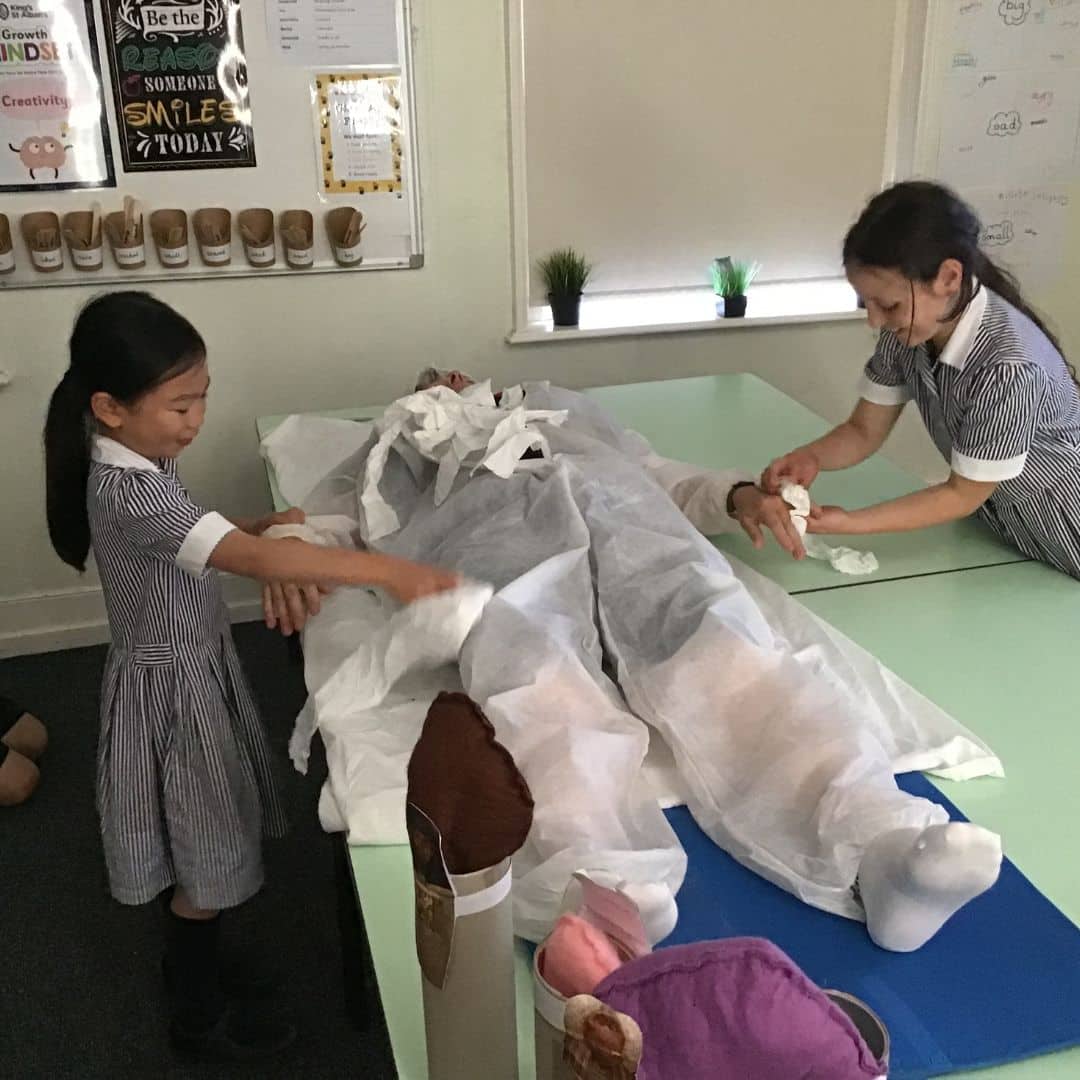
Year Three at King’s St Alban’s had an exhilarating Wednesday afternoon as they stepped back in time to ancient Egypt, taking part in the mummification of Pharaoh Woodger. The classroom buzzed with excitement as the pupils entered the “Ibu” (“beautiful house”) to begin their immersive history lesson.
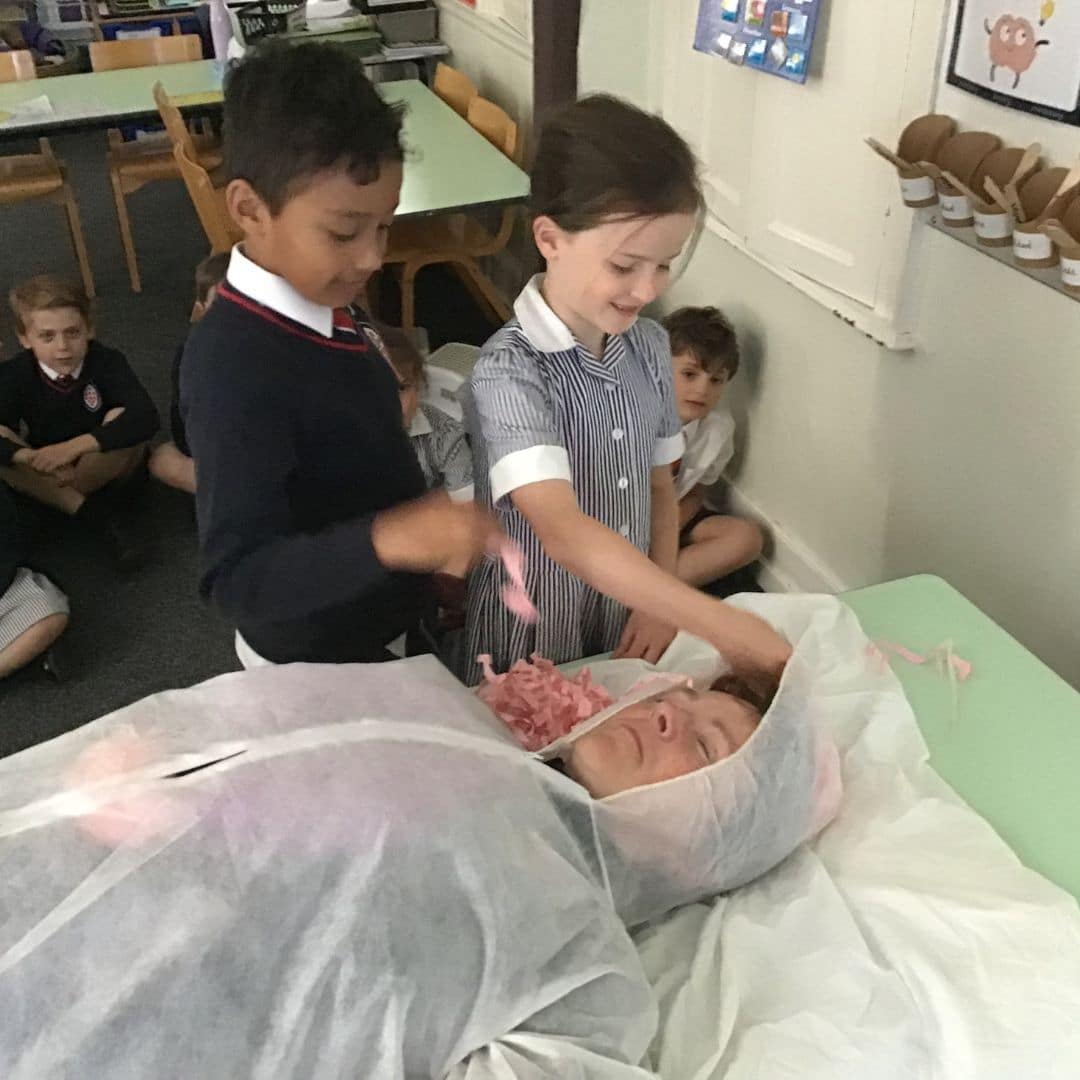
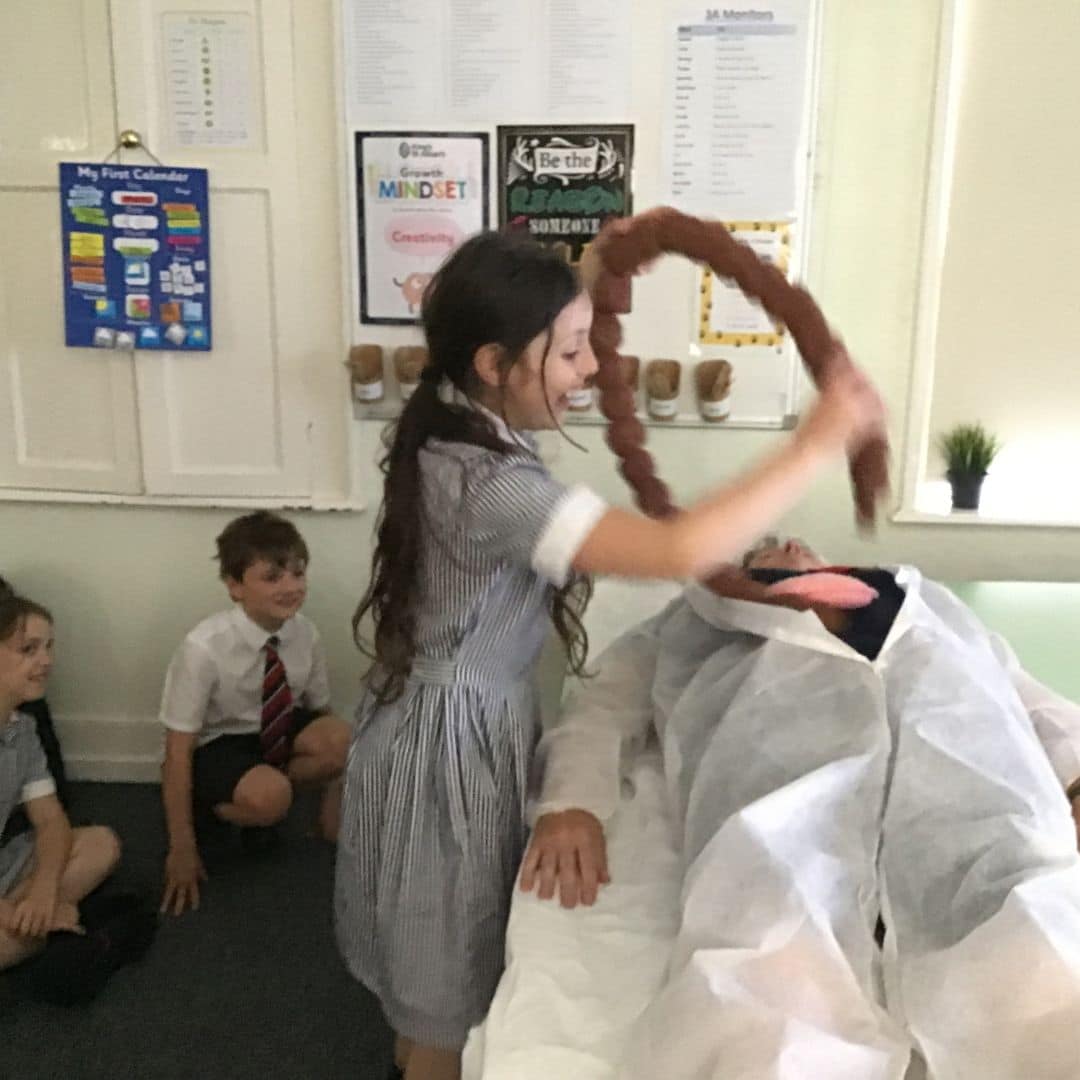
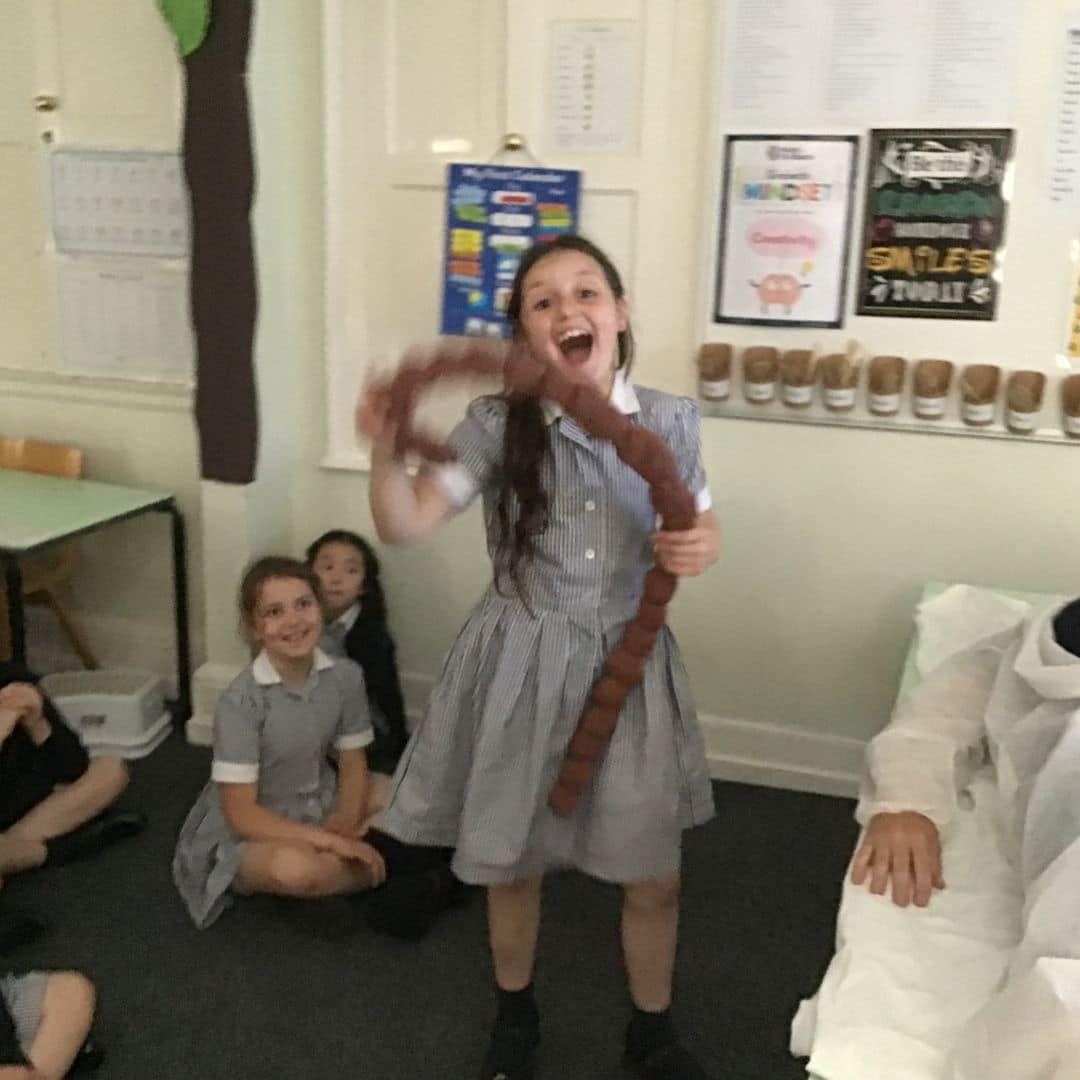
The adventure began with the washing of Pharaoh Woodger’s body using water from the River Nile, symbolising the purification process essential for the journey to the afterlife. The next step brought both curiosity and giggles: using a crochet hook, the brain was removed through the nose. Ancient Egyptians believed the brain was unnecessary and discarded it, considering the heart to be the centre of intelligence.
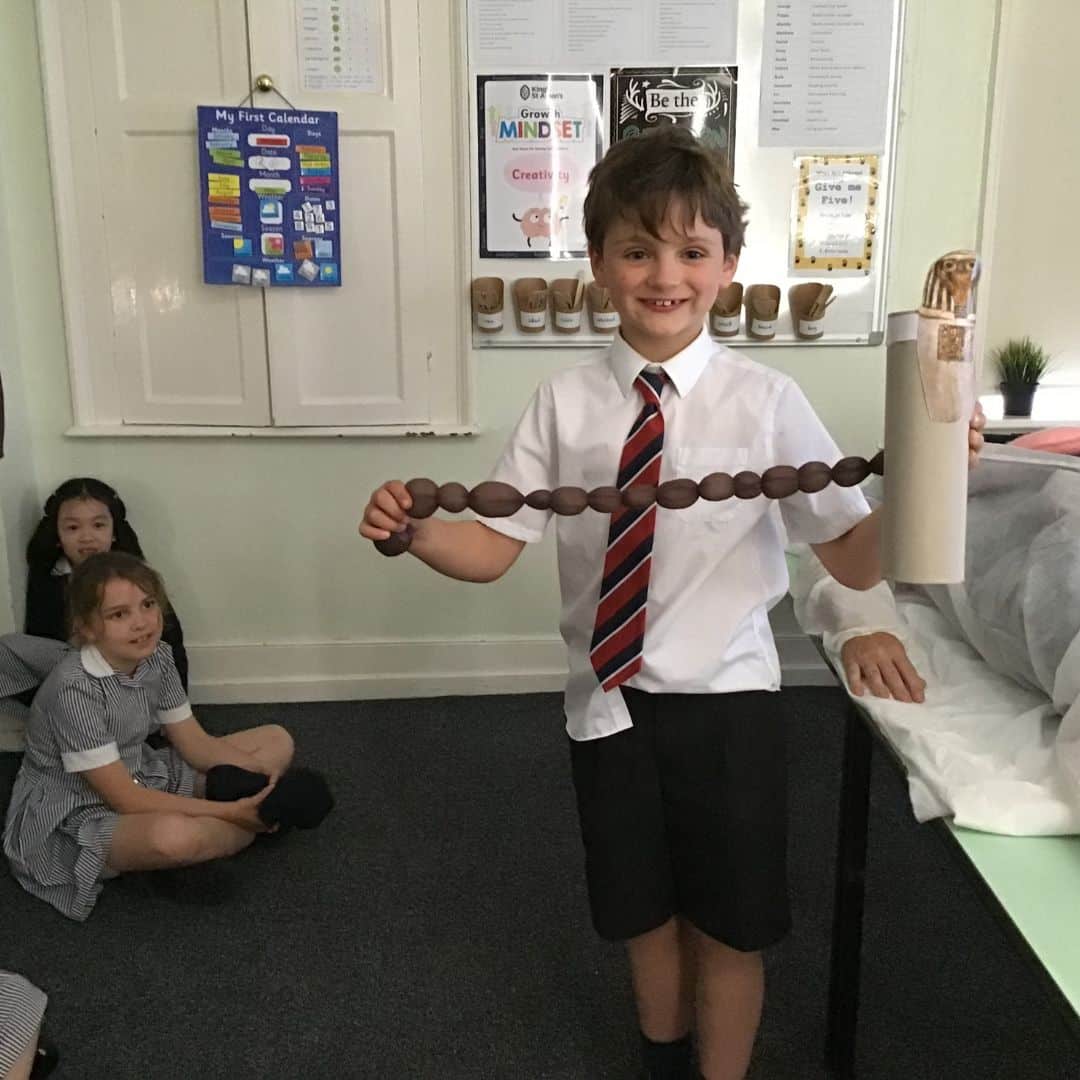
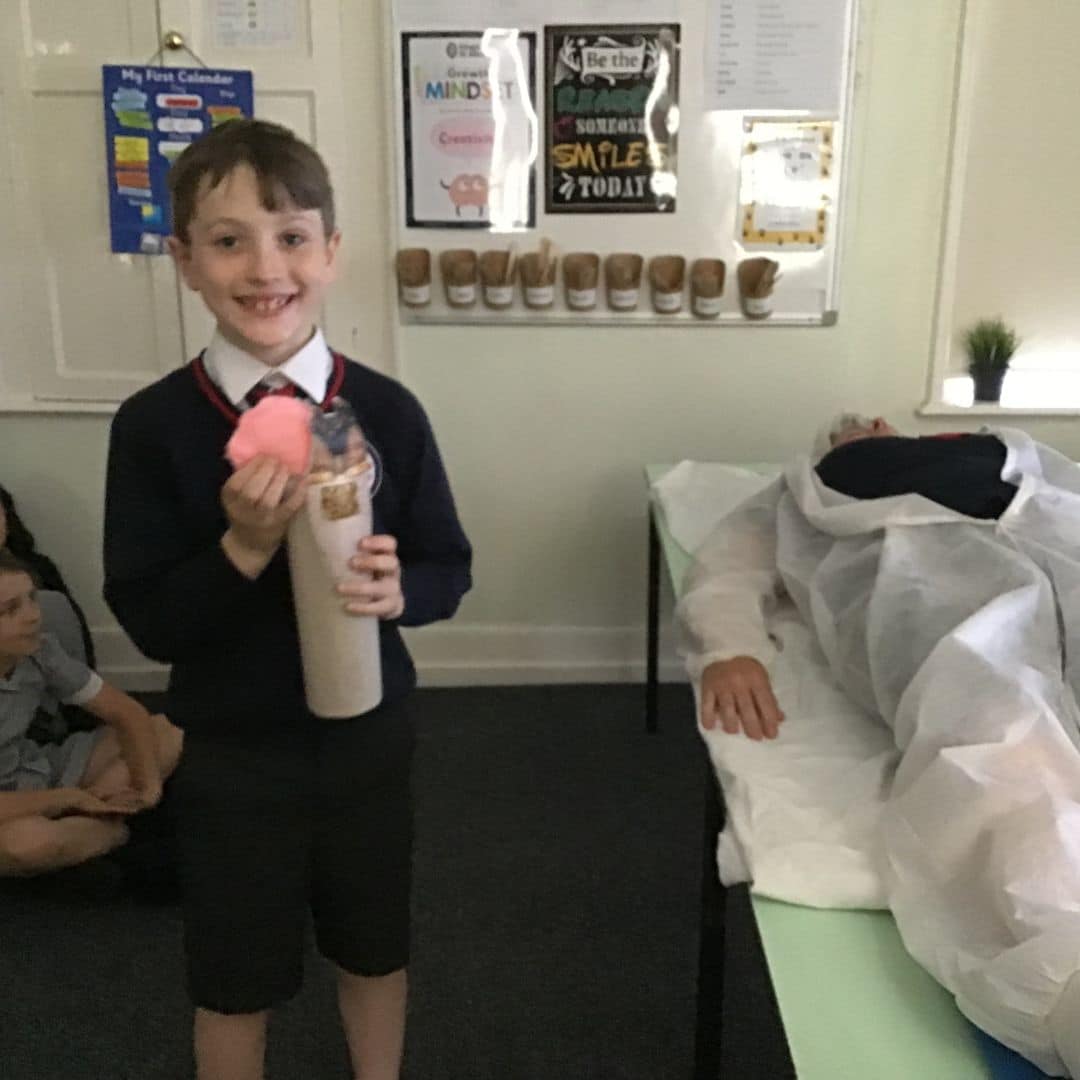
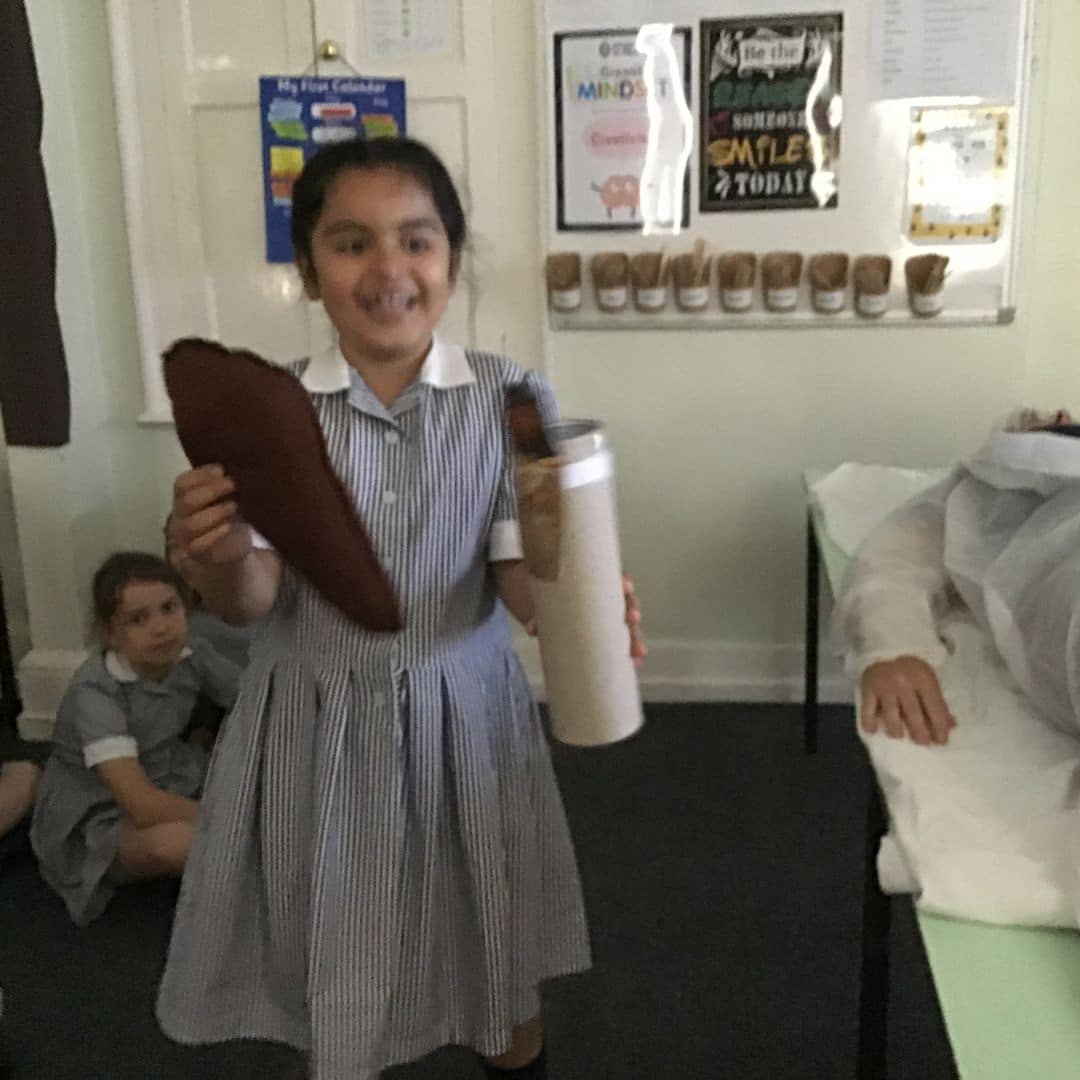
The children eagerly participated in the next stage, where they removed the liver, stomach, intestines, and lungs. These organs were then carefully placed into canopic jars, each assigned a specific deity for protection. This hands-on activity captivated the pupils, making the history lesson come alive.
The body of Pharaoh Woodger was then packed with linen and sawdust and covered in natron, a type of salt, to dry out. Though traditionally a 40-day process, our pupils expedited it to 40 seconds, much to their delight. Once dried, the body was washed again and coated with oils to preserve the skin’s elasticity, demonstrating the meticulous care that ancient Egyptians took in preparing for the afterlife.
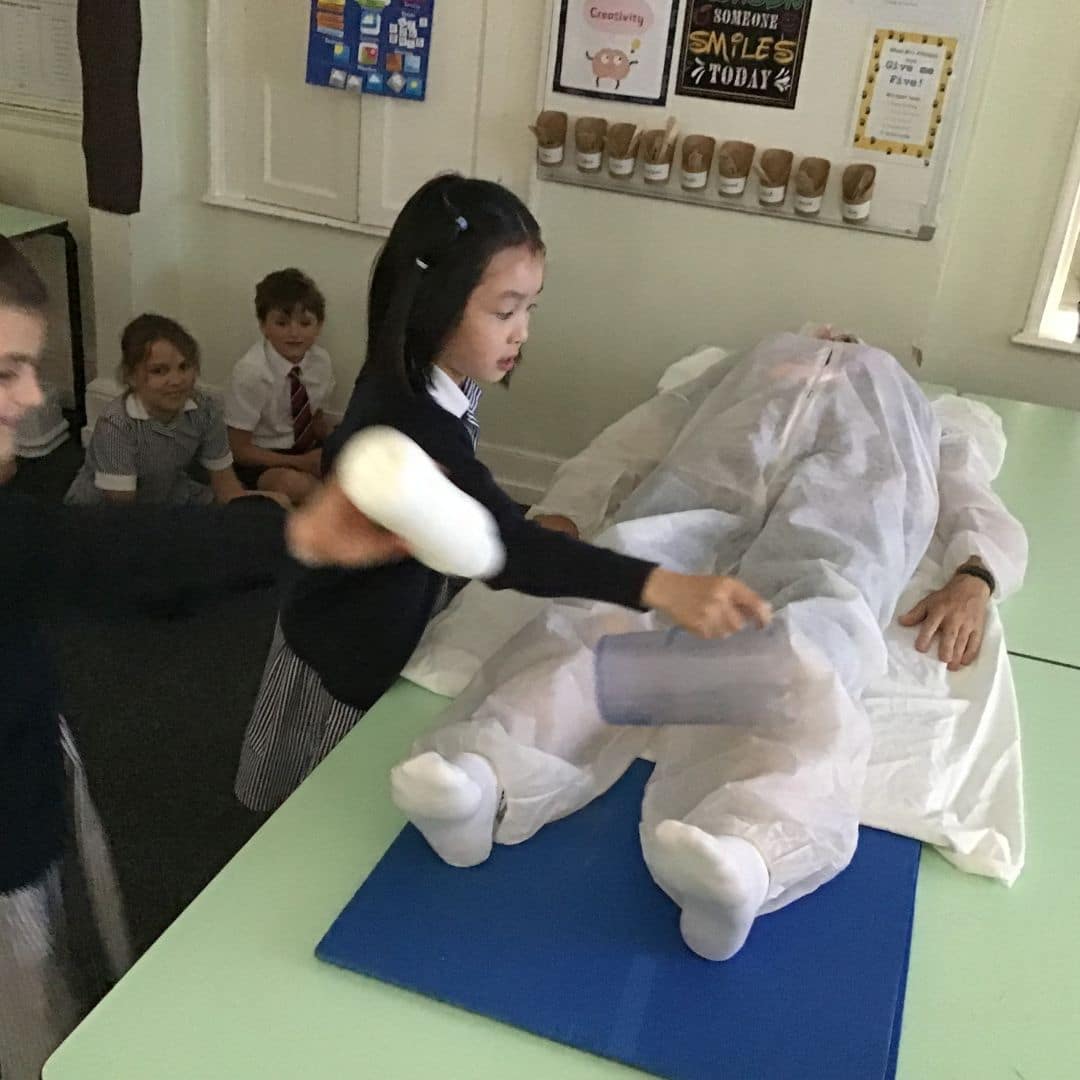
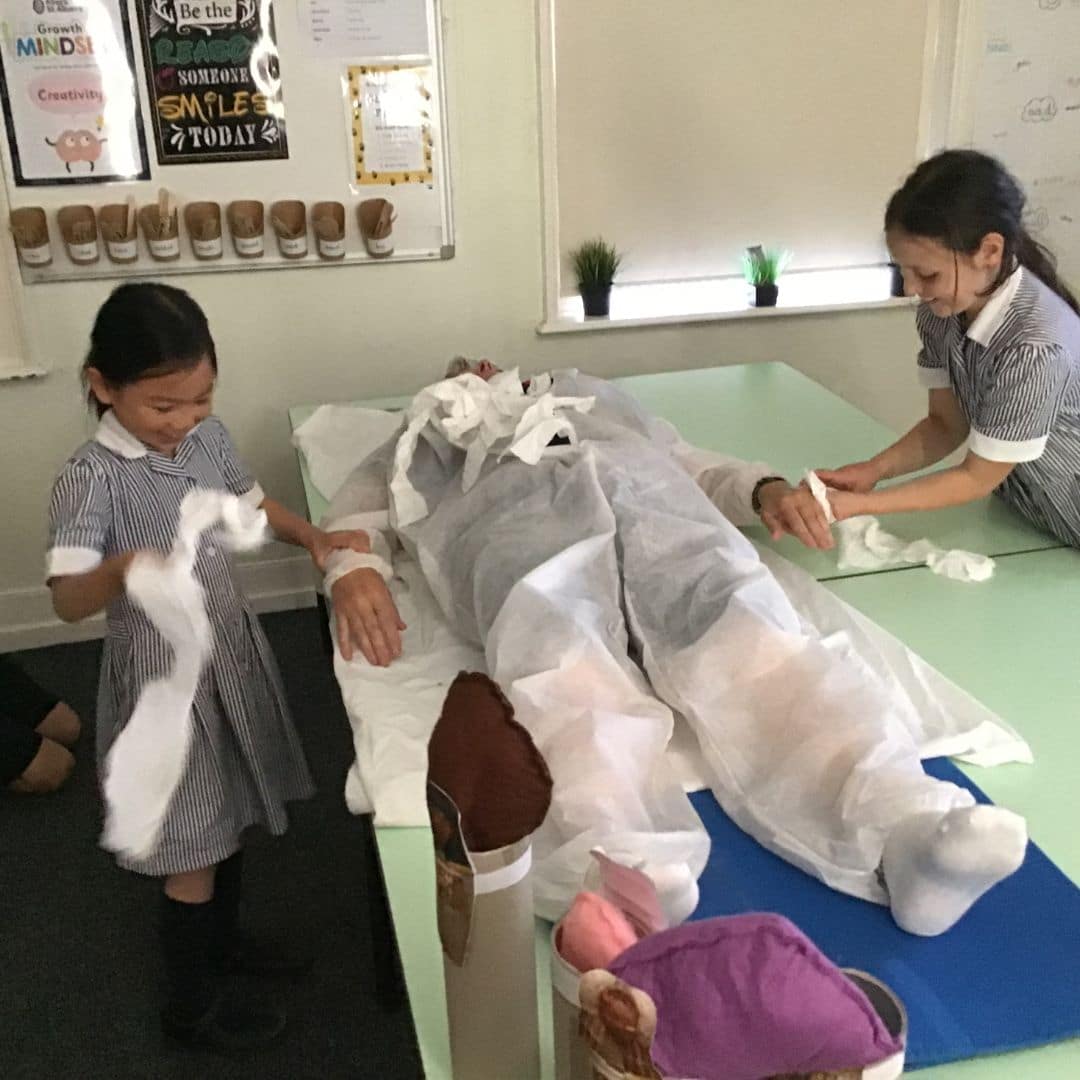
Wrapping the body was the next step, requiring careful attention to detail. The children wrapped each finger, arm, leg, and finally the entire body, ensuring Pharaoh Woodger was ready for his journey. The climax of the event was placing the mummified Pharaoh into a beautifully crafted sarcophagus.
This interactive and informative session was not only educational but also filled with fun and laughter. It provided the pupils with a deeper understanding of ancient Egyptian culture and the mummification process. A big thank you to Pharaoh Woodger for being such a good sport and making the lesson an unforgettable experience!
This hands-on history lesson allowed Year Three pupils to engage with the past in a meaningful way, sparking curiosity and a love for learning about ancient civilizations.

 Back
Back