

 Back
Back
King's Worcester
30 July
Cadets Master Tactical Skills and Teamwork Through Field Exercises and Drills
KSW CCF Cadets at the 2024 Summer Camp participated in a series of challenging and immersive training activities, ranging from tactical field exercises and drill sequences to first aid and marksmanship, culminating in a successful platoon attack and an awards ceremony in the officer’s mess.
Cadets worked on new drill sequences with Captain Grinnell with about turns on the march, eyes left and right, the correct way to form up on the parade square and marching on the spot. Later practiced together in sequences to be presented in front of Lieutenant Colonel Ellen.
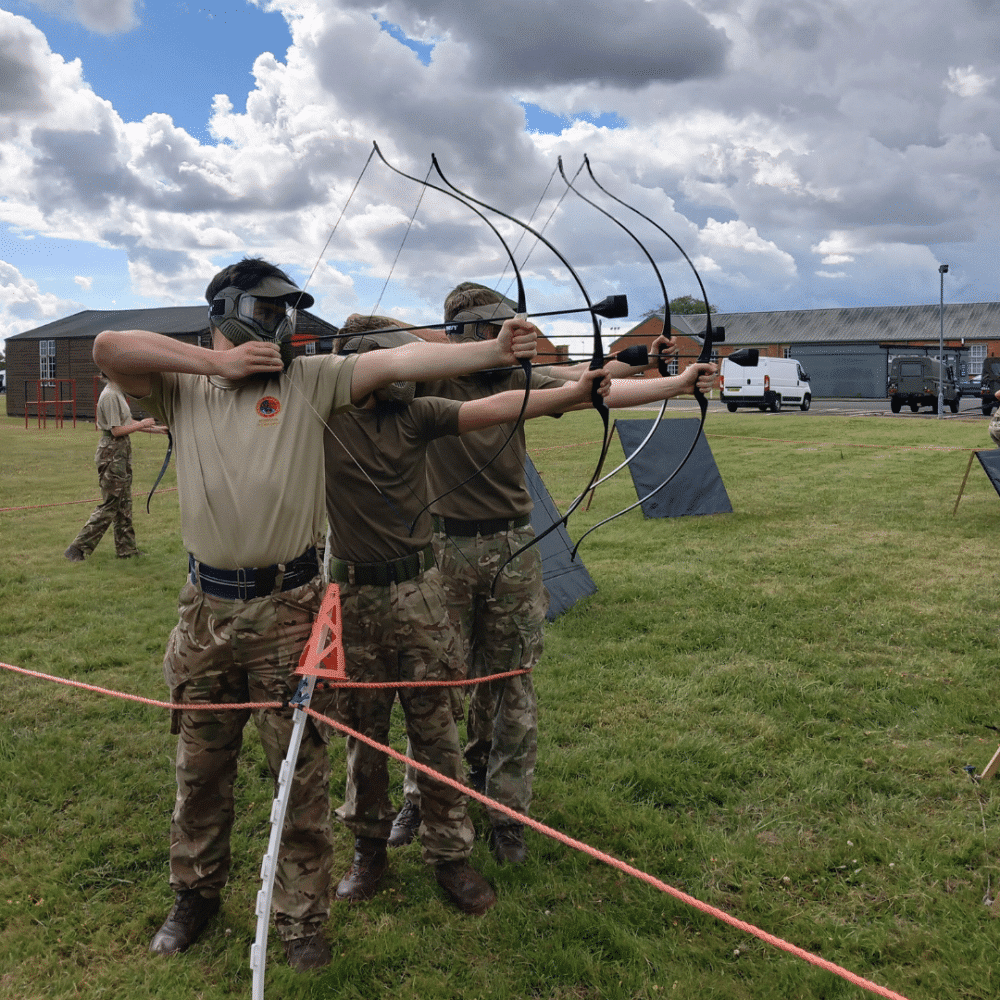
Archery tag with Squadron Leader Ellen allowed cadets to practice taking cover and aimed shots with foam arrows as well as working together as a team to win the task.
Signals with Flight Lieutenant Lyons taught cadets how to correctly send and answer messages over the radio in order to effectively communicate with one another.
First aid with Sergeant Dudfield covered the primary survey, response levels of a casualty and a recap of CPR with rescue breathes practiced on Resusci Annie.
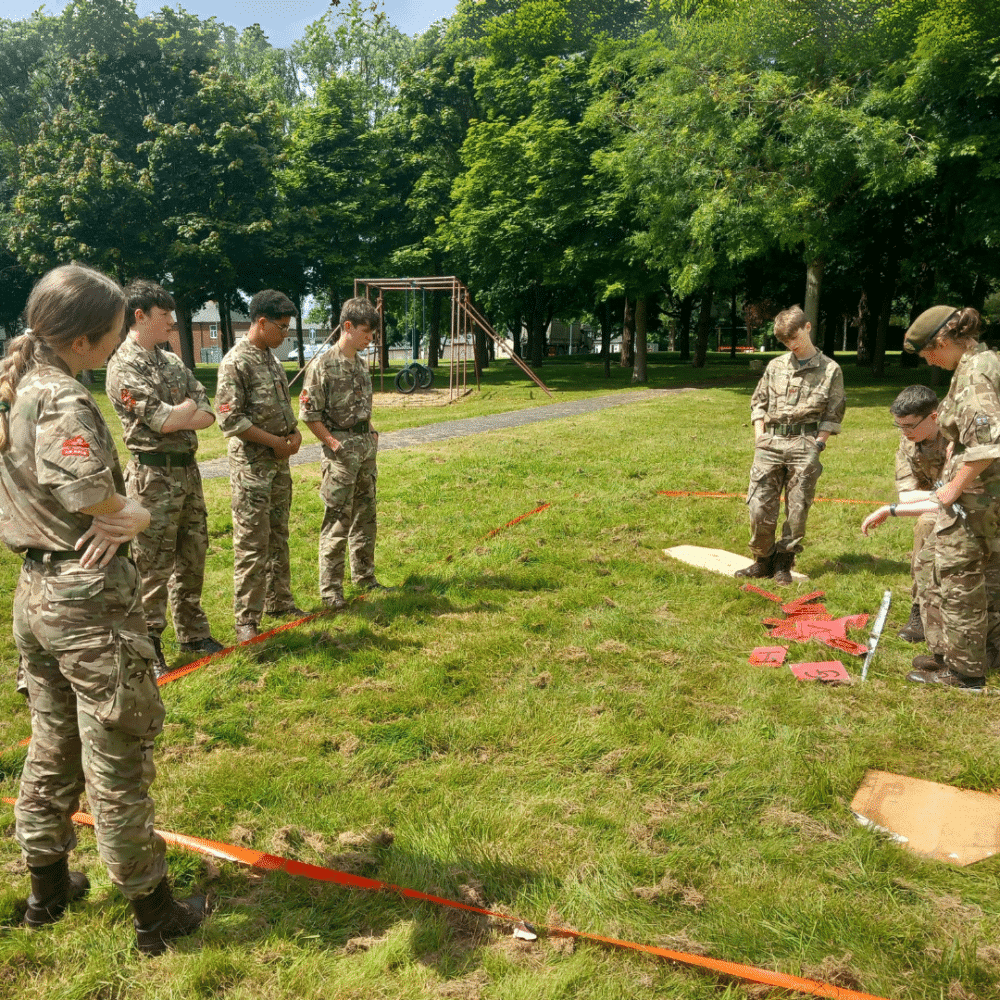
Command tasks with Sergeant Cornock included cadets being tasked to make as many words as possible in 25 minutes with letters found in a custard lake surrounding an island that cadets needed to find a way onto in order to create words. Cadets would be awarded bonus points for figuring out the 12-letter word ‘vigorniensis’.
Cadets learnt harbour drills with Captain Grinnell in preparation for the field exercise. Cadets were taught the importance of a good harbour location as well as how to enter and set-up a harbour. This skill was practiced by doing a hasty attack, Recce patrol and entering the harbour in a triangular formation.
The field gun run with Lieutenant Parrott meant that the two sections worked together and used communication in order to get the field gun from point A to point B in a timely manner. The sections ran to assemble the gun and ran it to the first box to complete a wheel change. Then ran to dismantle the whole field gun to fit through a small passage to then reassemble it on the other side and run it back to the start location. With practice, the platoon managed to complete the field gun run in under 4 minutes.
The DCCT with Lieutenant Colonel Ellen gave the cadets a chance to practice the marksmanship principles and shooting from different positions in preparation for shooting on the live range.
The 25-metre range allowed the younger cadets the opportunity to fire the L98 for the first time and the more senior cadets to work on their aim from different positions. The shooting aspect was largely successful, unfortunately, there were not enough badges for cadets who received marksman. The best shot goes to Sergeant Cox, who had a grouping of 10mm.
During this time, cadets were taught measuring distances with Squadron Leader Ellen with objects hidden around the area and also ‘why things are seen’ describing the objects and how far away it was from the observer. Sergeant Cornock taught cadets about living in the field which included setting up a basha and sleeping system as fast as possible and doing it blindfolded. Sergeant Dudfield reminded cadets of the marksmanship principles and stoppage drills.
Signals orienteering with Flight Lieutenant Lyons allowed cadets to take the skills that they had learnt previously into the field by being given different locations around the base and required to answer questions. Not only did the cadets get to practice radio skills but learnt more about the military base’s history and facilities.
After being briefed about the 4 phased plan for the fieldcraft exercise, cadets moved to the start line to patrol the area to set up a hasty attack where section commanders and HQ did a Recce patrol to set up the hasty harbour that they had be taught previously that week. The morning included observation posts where cadets could observe the enemy and use range cards to gather information needed for attacks. In the afternoon, cadets completed section attacks via Charlie and Delta fire teams.
‘Day Day’ started the same as the fieldcraft exercise- cadets did a hasty attack, and a linear harbour was set up. Cadets were briefed on the platoon attack as shown on a model. The L6th became section commanders to show their leadership and tactics learnt from previous CCF weekends. Before the platoon attack, Captain Grinnell gave the cadets a fight speech to inspire the cadets for war. Sections performed rehearsals and backup plans if the attack didn’t go as planned. Section 1 and Section 2 covered fire from either side of the enemy harbour. Section 3 deployed smoke and cleared the building. Each section had to deal with a casualty and appropriate first aid was administered as taught by Sergeant Dudfield. During this time, ammunition was redistributed for a second attack. The platoon successfully destroyed the enemy and returned to the harbour.
Cadets were invited to the officer’s mess and learnt its history through groups being tasked with specific questions. Awards were given out to cadets from the NCOs and the officers after the meal which concluded summer camp 2024.
Article written by Upper Sixth Cadet, Alicia F